

Blog
Van Gogh Prints for Brighter, Better-Loved Rooms

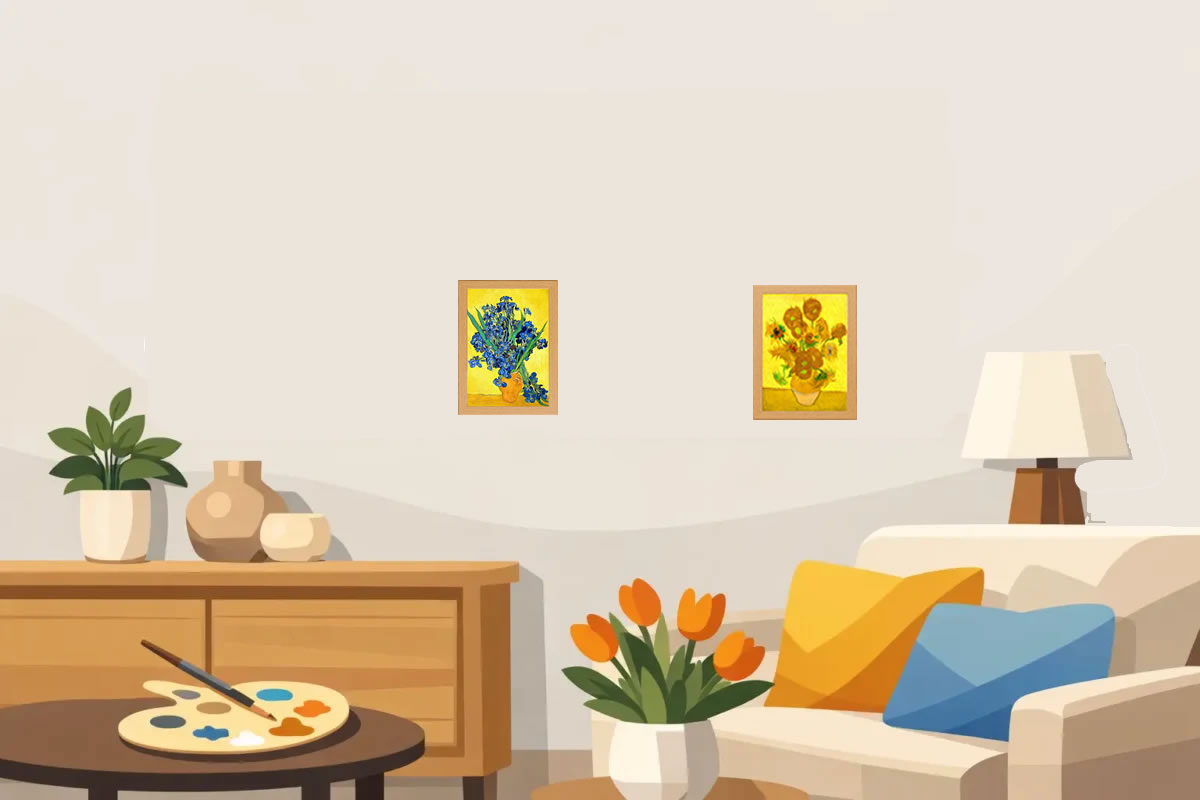
A blank wall does not always need more furniture in front of it. Often, it needs one image with enough colour, movement and character to make the whole room feel finished. Van Gogh prints do this remarkably well. A yellow bedroom wall can feel warmer beside a sunflower study; a quiet hallway gains purpose with a cypress-lined sky; and a navy-blue cushion suddenly makes sense beneath the deep blues of a night scene.
Vincent van Gogh remains one of the most recognisable artists in the world, but his work is not only for galleries or serious collectors. Framed reproductions make his pictures an affordable, ready-to-display choice for homes that need personality without a complicated decorating project. The key is choosing the right image for the mood, colours and scale of your space.
Why Van Gogh Prints Work So Well at Home
Van Gogh’s paintings are full of visible brushstrokes. Even in reproduction, that texture gives a wall more energy than a flat block of colour or a generic photograph. His pictures feel expressive without being difficult to live with: you can enjoy the bold colours from across the room, then notice the smaller details when you pass by.
They also suit a surprising range of interiors. A traditional living room can take the rich ochres and greens of a countryside scene. A modern flat may benefit from the dramatic contrast of dark blue skies and bright stars. In a cottage-style kitchen or dining area, still lifes of flowers bring warmth without looking overly formal.
There is a practical reason, too. Familiar art is easier to choose. You do not need specialist knowledge to know whether you enjoy the hopeful yellows of Sunflowers or the swirling night sky of The Starry Night. Start with the image that you would genuinely be pleased to see every day, then use its colours to guide the rest of the room.
Choosing Van Gogh Prints by Room
Living rooms: make the artwork a focal point
The living room is usually the best place for a more dramatic Van Gogh image. The Starry Night has enough movement and contrast to hold its own above a sofa, sideboard or fireplace. Its deep blue background works particularly well with neutral walls, charcoal furnishings, warm wood and brass details. If your room already has a lot going on – patterned cushions, colourful books, bold curtains – a calmer landscape may be the better choice.
Wheatfield with Cypresses and other rural scenes offer a similar sense of movement, but with more green, gold and earth tones. They can soften a room filled with beige, cream, olive or natural timber. A compact framed print is especially useful when a large wall needs an anchor but you do not want to commit to a huge piece of art.
Bedrooms: choose colour with a calmer feel
A bedroom does not have to be decorated entirely in pale shades, but the artwork should support the atmosphere you want at the end of the day. Almond Blossom is a popular choice because its pale blue ground and flowering branches feel fresh and restful. It suits white, soft grey, duck-egg blue and blush-pink schemes, and makes a thoughtful gift for a new home or nursery.
For a more grown-up bedroom, consider a floral still life or a print with softer ochre tones. Sunflowers can look cheerful rather than overpowering when they are paired with plain bedding, warm cream walls and simple wooden furniture. If the room is small, avoid crowding the print with several competing pictures nearby. Give it a little clear wall space so the colour can do its job.
Hallways and kitchens: use smaller walls well
Hallways are often overlooked because they are practical spaces, yet they are the first part of the home that guests see. A framed Van Gogh landscape can turn a narrow stretch of wall into a deliberate feature. Place it where it can be seen from the front door or at the turn of the stairs, rather than hanging it too high along a long corridor.
Kitchens and dining spaces suit floral subjects, still lifes and sunny outdoor scenes. Their warmer colours sit naturally alongside wood, ceramic tableware and greenery. Keep framed art away from direct heat, steam and heavy splashes. A glass-fronted frame provides a smart finished appearance, but it is still wise to choose a wall away from the hob and sink.
Match the Colours, Not Every Detail
You do not need to redecorate a room around a painting. Pulling out one or two colours is enough. A print with golden wheat can be echoed with a mustard cushion, a tan throw or a natural jute rug. The blue in a night sky can be repeated in a lampshade, vase or painted door.
Trying to match every shade is where rooms can begin to look staged. Van Gogh used strong colour contrasts, and that is part of the appeal. Let the print be the liveliest element, especially in a room with calm walls and straightforward furniture. Conversely, if your wallpaper is busy or your sofa is brightly coloured, choose an image that shares one of those shades rather than introducing several new ones.
Frame colour matters as well. A simple dark frame can give a vivid print definition against a pale wall, while a lighter frame may suit an airy, softer scheme. Ready-framed artwork removes the awkward stage of measuring, ordering a frame separately and hoping the finished combination works. It also means the piece can be on the wall soon after it arrives, rather than sitting rolled up in a drawer.
Getting the Size and Position Right
A compact print can have plenty of impact when it is positioned carefully. Above a small console table, a 10 x 13.5-inch framed artwork can create a neat focal point. It also works well in pairs or as part of a mixed gallery wall. Over a large three-seater sofa, however, one small picture may look lost. In that situation, group it with other framed art or place it on a narrower wall nearby.
As a useful guide, hang artwork so that its centre sits around eye level for most people. In a hallway, that normally means the centre of the frame is roughly 145 to 150 cm from the floor. Above furniture, leave a modest gap rather than placing the frame right against the top edge. Around 15 to 20 cm above a sideboard or sofa usually looks balanced, although the proportions of the furniture matter more than following a rigid rule.
If you are building a gallery wall, begin with your Van Gogh print and arrange the other pieces around it. Combine it with botanical studies, simple line drawings, vintage-style posters or family photographs in related frame colours. Lay the arrangement on the floor first. This takes a few extra minutes, but it is much easier than filling and repainting several unnecessary nail holes.
A Recognisable Gift That Still Feels Personal
Art can be a difficult gift when you are unsure of someone’s taste. Van Gogh is a safer starting point than an unfamiliar artist because the imagery is recognisable, but the choice can still feel personal. Sunflowers suits someone who enjoys warm, cheerful interiors. Almond Blossom is a lovely housewarming or birthday choice. A dramatic night scene may be ideal for the friend whose home is filled with darker tones and contemporary furniture.
A ready-to-display framed print is particularly useful for first homes, student rooms and rented properties, where people may not yet own spare frames or know exactly how they want to decorate. It is a present that does not ask the recipient to make another purchase before they can enjoy it.
The best place for a Van Gogh print is not necessarily the grandest wall in the house. Choose the spot you look at while making tea, settling down with a book or coming through the door after a long day. Art earns its place when it becomes part of those ordinary moments.