

Blog
Do Prints Fade? How to Keep Wall Art Bright

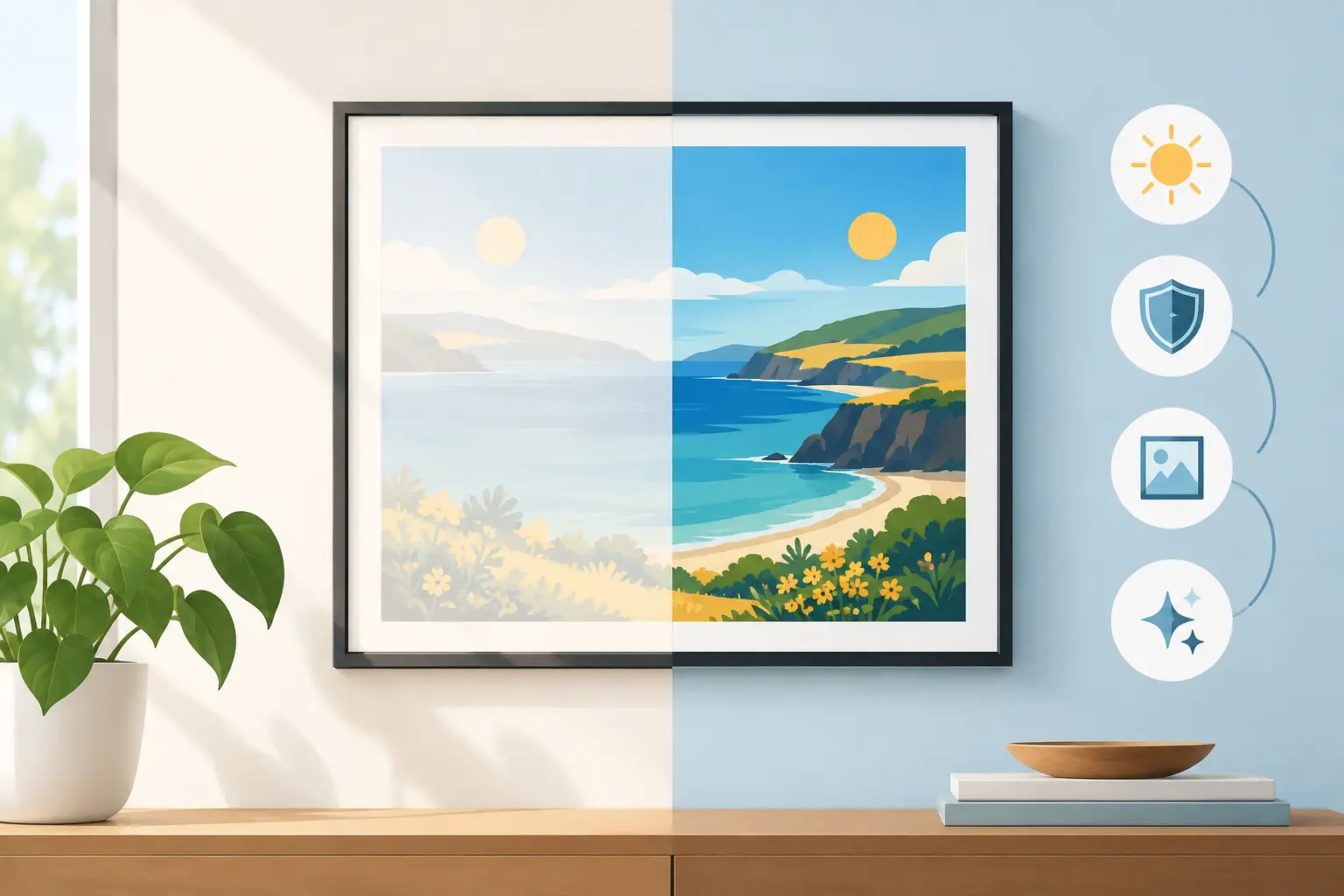
A sunlit wall can make a favourite picture look its best, but it can also slowly change it. So, do prints fade? Yes, all printed artwork can fade over time, particularly when it is exposed to strong sunlight, heat, humidity or poor-quality materials. The good news is that a few sensible choices can keep framed wall art looking rich and colourful for many years.
For most homes, this is not a reason to hide art away. It is simply a reason to think about placement. A framed print of Van Gogh, Lowry or a soft French Impressionist scene should be something you enjoy every day, not something you worry about constantly.
Why do prints fade?
Fading happens when light energy alters the pigments or dyes that create an image. Ultraviolet light, often shortened to UV, is the main culprit. It is present in direct sunshine, but daylight entering a room can also contain UV even when the sun is not falling directly on the frame.
The change is usually gradual. Reds and yellows may lose their warmth, deep blues can become flatter, and pale areas can take on a slightly dull or yellowed appearance. You may not notice it from one week to the next, but compare a print that has hung in a bright bay window for several years with one stored in a drawer and the difference can be clear.
Light is not the only factor. Heat can speed up the process, while damp conditions may encourage mould, staining or warping in the paper and backing. Smoke, cooking residues and household sprays can also settle on glass and frames. In other words, fading is partly about the print itself and partly about where it lives.
The materials make a real difference
Not every reproduction is made in the same way. The inks, paper, printing method and glazing all affect how well a picture holds its appearance.
Ink and paper quality
Fine art reproductions may use pigment-based inks, dye-based inks or traditional printed colour processes. Pigment inks are generally more resistant to fading than dyes, although the result also depends on the paper and how the image has been produced. A well-made print on suitable art paper will normally stay attractive longer than a thin, inexpensive poster exposed to bright daylight.
This does not mean affordable art cannot be a good choice. It means it is worth buying from a retailer that presents artwork as a finished decorative piece rather than a disposable afterthought. A ready-framed print protects the paper from handling and gives it a more considered place in your home.
Glass-fronted frames
Glass provides a useful physical barrier against dust, fingerprints and splashes. It does not automatically block all UV light, however. Specialist UV-filtering glazing offers extra protection, but it is usually more expensive and may be most worthwhile for a print in a particularly sunny room, a treasured gift or artwork you expect to keep for decades.
For everyday wall art, standard glass combined with thoughtful placement is often a practical balance of protection, appearance and cost. It lets you enjoy classic images without turning a simple decorating decision into a museum conservation project.
Mounts, backing and adhesives
What sits behind the artwork matters too. Poor-quality backing boards and acidic materials can contribute to yellowing over a long period. If you are reframing a much-loved print, ask for acid-free mounts and backing. This is especially sensible for older paper prints, limited editions or sentimental pieces.
With compact framed prints, keeping the frame intact and dry goes a long way. Avoid opening the back unless needed, as this can introduce dust, bend the paper or make it harder to secure neatly again.
Where to hang prints so they stay brighter
The simplest protection is choosing the right wall. Direct sunshine for several hours a day is the biggest risk, particularly from south-facing windows. A bright room does not have to be off limits, but avoid placing prints where a sharp patch of sunlight crosses the image each afternoon.
An interior wall, a shaded side wall or the wall opposite a window is usually kinder to artwork than the space immediately beside glass doors or a sunny conservatory. If a picture is important to your scheme but the only suitable position gets strong sun, consider fitting a blind, curtain or UV-filtering window film. These can protect furniture and flooring as well as art.
Be equally cautious around radiators, fireplaces and log burners. Repeated heat changes can dry materials out and may eventually affect paper, backing and frame joints. In kitchens and bathrooms, steam and grease are the larger concern. A framed print can work beautifully in these spaces, but choose a well-ventilated spot away from the hob, kettle, shower and direct splashes.
Match the print to the room, not just the empty wall
There is a decorating benefit to this careful placement. A quieter wall often gives artwork more presence. Instead of placing a colourful Picasso print in the brightest, busiest corner of the room, try making it a focal point above a sideboard, reading chair or console table. The colours will be easier to appreciate, and the print will be better protected.
For bedrooms, softer light is particularly flattering to art. A pastoral Constable landscape, a Victorian dog portrait or a gentle Impressionist scene can make the room feel restful without needing a sun-drenched position. Hallways and landings are also useful places for gallery walls, provided they are not damp or overheated.
If you are arranging several framed pieces together, keep spacing consistent and avoid placing one frame in a very bright strip of light while the others remain shaded. Over time, uneven fading can make a coordinated display look less harmonious.
Simple care for framed wall art
Most framed prints need very little maintenance. Dust the frame occasionally with a dry, soft microfibre cloth. Clean the glass lightly, spraying cleaner onto the cloth rather than directly onto the frame, so liquid cannot seep behind the glass or into the edges.
Do not use abrasive pads, strong solvents or dripping wet cloths. If condensation appears inside the frame, take it down and allow it to dry in a clean, airy room. Persistent condensation may signal a damp wall or too much moisture in the room, both of which are worth addressing before rehanging the artwork.
Rotate pieces if you regularly change your décor. Moving a print from a bright room to a shaded hallway for part of the year can reduce its total light exposure, while also giving your home a fresh look. Store any unframed prints flat, dry and away from lofts, sheds or garages where temperature and humidity can fluctuate sharply.
When fading is more likely to be noticeable
Highly saturated images tend to show change more readily than muted ones. A bold modern abstract, vivid royal portrait or bright floral still life may reveal fading sooner than a grey-blue landscape or sepia-toned photograph. This is not a reason to avoid colour. It simply makes positioning more worthwhile.
Some fading can also be mistaken for dirty glass. Before assuming a print has deteriorated, clean the glazing carefully and look at it in natural, indirect light. If the image genuinely looks faded, reframing with UV-filtering glass may help protect it from further change, though it cannot restore colour already lost.
For a favourite ready-to-display piece from Stortvalley, think of care as part of the styling process: choose a wall where the artwork can be seen properly, keep it away from harsh conditions, and let the frame do its job.
The best wall art earns its place by making a room feel more like yours. Hang the picture you love, give it a little protection from sun and steam, and it can keep bringing character to that blank wall long after the rest of the room has changed.