

Blog
12 Hallway Wall Art Ideas for a Welcoming Home

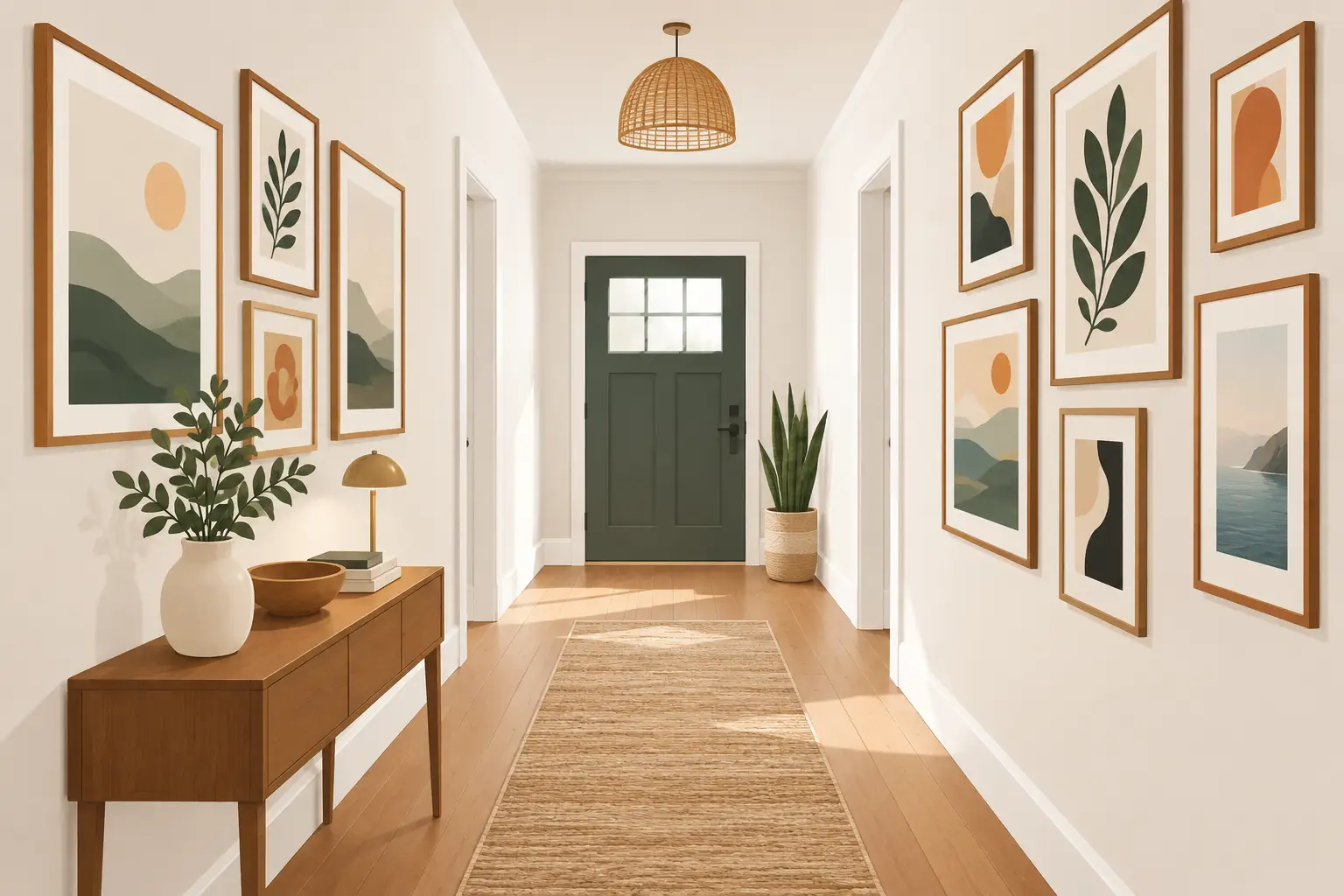
The hallway is the first room you and your visitors see, yet it is often left with bare walls, a coat rack and little else. The right hallway wall art ideas can make this hardworking space feel considered from the moment the front door opens. Better still, art adds personality without taking up precious floor space in a narrow entrance or compact landing.
A framed print is a simple place to start. It brings colour, story and a finished look in one piece, with no need to source a separate frame or spend a weekend wrestling with mounts. Whether your home is period, modern or somewhere pleasantly in between, the best choice is one that feels connected to the rooms beyond the hall.
Hallway wall art ideas that suit real homes
1. Make one print the focal point
A single, well-chosen framed artwork can be more effective than a busy arrangement, particularly in a slim hallway. Hang it on the clearest wall, usually opposite the front door or above a narrow console table, where it has room to be noticed.
For a traditional home, a John Constable landscape brings a calm, familiar sense of place. In a more contemporary setting, a bold Picasso print creates instant contrast against pale walls. Choose a picture with colours that appear elsewhere nearby, perhaps in a runner, cushion or painted door, and the hall will feel tied into the rest of the house.
2. Build a small gallery wall up the stairs
The wall running alongside a staircase is made for a gallery arrangement. It turns an awkward stretch of plaster into something you can enjoy as you move through the house. Start with the centre picture at around eye level from a stair tread, then work outwards while following the upward line of the staircase.
Keeping frames the same colour creates an orderly appearance, even when the artworks vary. A collection of Impressionist scenes, Lowry industrial views and family photographs can work together if they share a simple black, white or wood-toned frame. Before reaching for the hammer, lay the arrangement on the floor and adjust the gaps until it looks balanced.
3. Use landscapes to widen a narrow space
A long corridor can feel closed in, especially where there is little natural light. Landscape art gives the eye somewhere to travel. Open skies, rivers, country paths and coastal views create a welcome suggestion of depth.
This is where classic British scenery earns its place. Constable’s changing skies and rural scenes are gentle enough for a hall but never dull. For darker entrances, select an image with cream, soft blue, green or warm gold rather than an overwhelmingly shadowy picture. The artwork should lift the space, not make it feel more enclosed.
4. Choose bright art for a dim entrance
Many hallways rely on artificial light, so treat colour as a practical decorating tool. Sunflower yellows, Impressionist pinks and the lively blues found in Van Gogh prints can bring warmth to an area that receives little daylight.
You do not need to repaint the whole hall to introduce colour. One cheerful framed print above a shoe cabinet can be enough. If your walls are already patterned or painted in a deep shade, choose art with a lighter background so the picture does not disappear into the scheme.
5. Create a calm pair above a console
Two matching-sized prints placed side by side offer a polished alternative to one larger picture. This approach works particularly well above a slim hallway table, where symmetry makes everyday objects such as keys, a lamp and a small vase look more intentional.
Try a pair of related subjects rather than identical images. Two French Impressionist garden scenes, for example, feel connected while still giving the eye something to explore. Leave a modest gap between the frames, usually around 5 to 10 cm depending on their size, so they read as a pair rather than one crowded block.
6. Let the house’s character lead
The most successful hallway wall art ideas usually acknowledge the home rather than fighting it. A Victorian terrace can carry sentimental Charles Burton Barber scenes, heritage portraits or detailed landscapes beautifully. A 1960s flat may suit graphic modern art, expressive line work or a colourful Picasso reproduction.
That does not mean every room must follow a strict historical rule. A classic print in a modern hall can look especially striking, provided there is a small point of connection, such as a similar frame finish or repeated colour. Contrast is appealing when it looks deliberate.
Make the hallway feel personal, not crowded
7. Mix art with meaningful photographs
Fine art does not have to replace personal pictures. A carefully chosen blend can make a hallway feel much more like home. Pair holiday photographs, old black-and-white family portraits or pictures of a much-loved pet with framed art in a similar palette.
The trick is consistency. Use matching frames, or restrict yourself to two frame colours at most. If every piece is a different size, colour and style, the arrangement can soon look accidental. A clear visual thread lets personal memories sit comfortably beside well-known artwork.
8. Turn a landing into a pause point
Landings are often overlooked because they are spaces we pass through quickly. Yet a landing wall can hold a picture that rewards a second glance. Consider a dreamy Impressionist scene, a royal portrait or a characterful Lowry print where it can be seen from the stairs and bedroom doors.
If the landing is small, one compact framed print is often enough. A larger collection needs breathing room and may make low ceilings feel lower. In a generous upstairs hall, however, a group of smaller works can create a mini gallery with real charm.
9. Use a picture ledge if you like to refresh your look
A shallow picture ledge offers flexibility for renters and committed rearrangers alike. Lean two or three framed prints together, placing the tallest at the back and allowing a smaller piece to overlap slightly. Add a tiny plant or decorative object only if there is enough depth to keep the ledge useful and uncluttered.
This relaxed approach suits changing seasonal displays. You might favour sunny floral art in spring, then bring in richer landscapes or winter scenes later in the year. Do make sure the ledge is securely fixed, especially in a busy family home where bags and coats regularly brush past.
10. Choose portraits for instant presence
Portrait art has a particular strength in entrance halls: it creates a feeling that the room is occupied and welcoming. A formal royal portrait can add grandeur to a traditional scheme, while a stylised modern face brings a playful, design-led edge.
Portraits are strongest when given space around them. Avoid squeezing one between a mirror, hooks and a light switch. Instead, position it on a clear section of wall where the face can become the focal point. This is a good choice for homes with neutral décor that need a little drama.
11. Repeat one colour from room to room
A hallway should introduce the mood of the home, not feel separate from it. Look towards the living room or kitchen and pick out one recurring shade. It could be sage green, terracotta, inky blue or a soft blush tone. Then choose artwork containing a version of that colour.
This need not be an exact match. In fact, slightly varied tones tend to look more natural. A blue-grey Constable sky may sit beautifully with navy accessories, while a Van Gogh print with golden details can echo brass handles or a mustard cushion in the next room.
12. Keep scale and hanging height in proportion
Even beautiful art can look wrong when it is hung too high or is far too small for the wall. As a general guide, position the centre of a picture at roughly eye level, adjusting for the fact that people view hallway art while standing or climbing stairs. Above a console table, leave enough space for the furniture and art to feel connected, rather than floating apart.
For a compact framed print, grouping can add visual weight where one piece might be lost. For a narrow wall beside the door, a single smaller artwork is usually more practical than a large frame that catches bags and elbows. Measure first, and remember to account for door swings, radiators and light switches.
A finished hallway starts with one good picture
You do not need an expensive renovation to make an entrance feel inviting. One ready-to-display framed print can shift a plain corridor from overlooked to personal, while a small gallery wall can tell guests something about the people who live there. At Stortvalley, familiar artists and classic subjects make it easy to find a piece that suits both your taste and your budget.
Choose the artwork that makes you pause when you walk past it. That small moment of enjoyment is exactly what a hallway should offer, every day.