

Blog
Framed Art Versus Canvas in Your Home

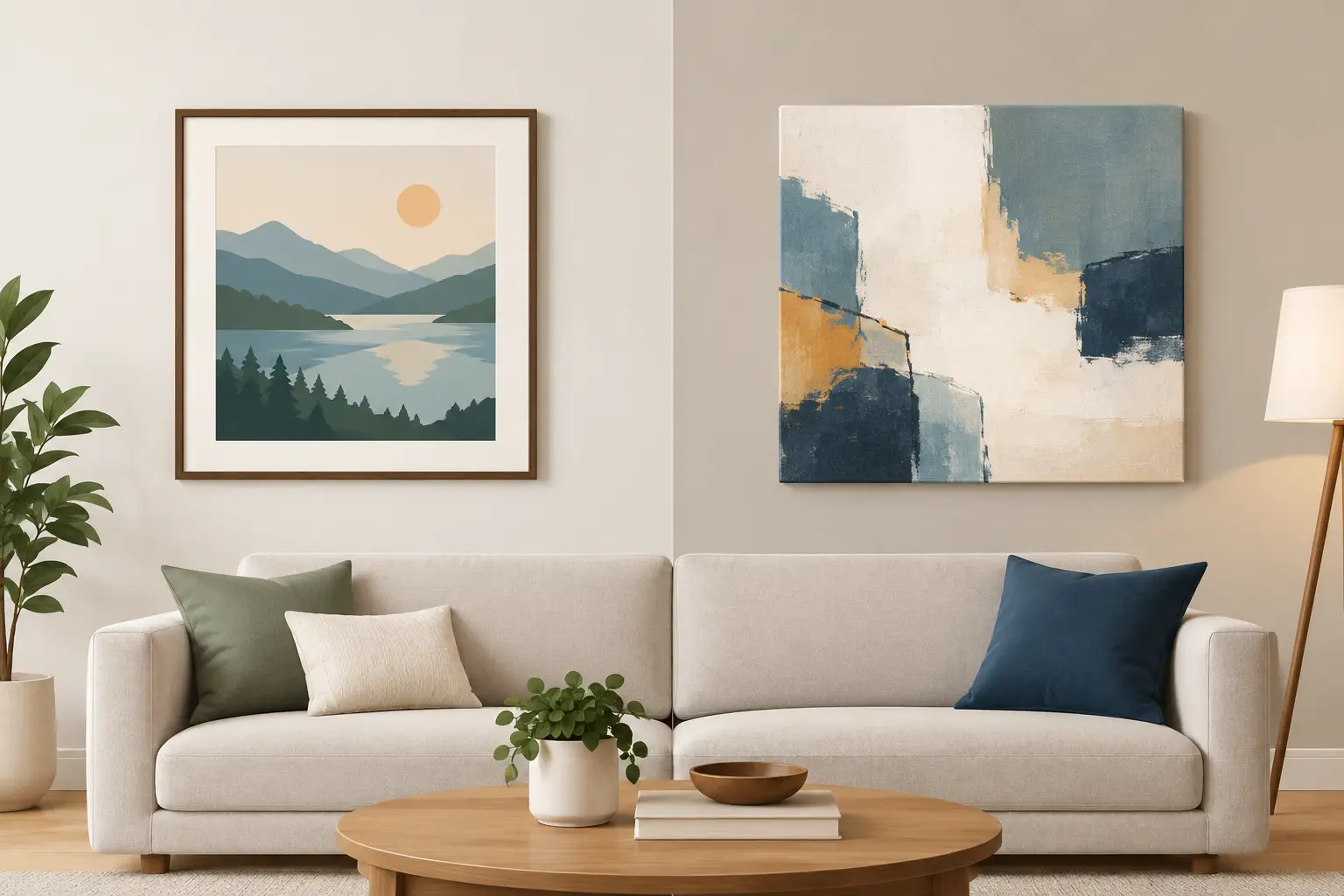
A Van Gogh print can feel completely different depending on how it reaches the wall. In the framed art versus canvas decision, the image is only one part of the result: the finish, edge, scale and surrounding room all play a part. One option gives you a neat, finished piece ready to hang; the other offers a more relaxed, gallery-style look. Neither is automatically better. The right choice is the one that suits your room, budget and the way you want the artwork to feel.
Framed art versus canvas: the key difference
Framed art is usually a printed artwork set behind glass and fitted into a frame. It has a defined border around the image, whether that border is a slim black frame, a warm wood effect or a more decorative finish. The frame makes the artwork feel contained and deliberate, which is especially useful when decorating a smaller wall or building a coordinated gallery arrangement.
Canvas is a printed image stretched over a wooden frame, with the picture often continuing around the sides. There is no glass front and, in many cases, no outer frame. This creates a softer, more informal presentation. A large landscape, abstract design or bold floral image can look striking on canvas because the image appears to occupy the wall more freely.
The decision is not simply traditional versus modern. A framed Picasso can look crisp and contemporary in a simple black frame, while a canvas of a classic Constable landscape can bring a relaxed country-house mood to a room. Think first about the atmosphere you want to create.
Why framed prints work so well in everyday homes
A ready-framed print removes several decisions at once. You do not need to measure for a separate frame, choose mounts, handle the artwork yourself or book a trip to a framers. For a first flat, a quick living-room refresh or a thoughtful gift, that convenience matters.
The glass front gives printed art a clean, polished appearance and offers protection from dust, fingerprints and everyday knocks. This can be particularly useful in busier spaces such as hallways, dining rooms and family living areas. A compact framed print is also easy to place above a side table, beside a bookshelf or on a narrow section of wall that would be overwhelmed by a larger canvas.
Framed art has a special advantage with recognisable paintings and heritage subjects. The visual structure of a frame can echo the formality of the artwork itself. A Lowry street scene, a royal portrait or a Victorian picture by Charles Burton Barber often gains presence from that finished edge. It helps the reproduction feel like a considered decorative object rather than simply an image on the wall.
For value-conscious decorating, smaller framed pieces are also wonderfully flexible. A 10 x 13.5-inch framed print can bring colour and character to a quiet corner without requiring a major spend or a complete redesign. Group two or three related prints together and the effect becomes more substantial.
Frames create order in a gallery wall
If you are planning a gallery wall, framed prints are usually the easier route. Repeating one frame colour, or choosing frames with a similar visual weight, helps different artists and subjects sit comfortably together. You might pair French Impressionist scenes with botanical studies, or mix a favourite portrait with a monochrome city view.
The artwork does not need to match exactly. What matters is a shared thread: a recurring blue, warm neutral tones, black frames or a common subject. Frames provide the structure that lets those differences look intentional.
When canvas is the stronger choice
Canvas comes into its own when you need one image to make a broad visual statement. Its lack of glazing means there is no reflected light from lamps or windows, a practical advantage in a bright conservatory or opposite a large window. The textured surface can also suggest the feel of a painted original, especially with expressive brushwork and saturated colour.
A canvas is often most effective when it is generously sized. Above a sofa, bed or fireplace, a single large image can anchor the entire room. Choose a subject with enough visual impact to hold that position: a dramatic seascape, an expansive countryside view, a colourful abstract or an oversized floral composition.
The unframed edge makes canvas feel less formal. That can be ideal for relaxed kitchens, casual open-plan rooms and contemporary interiors with clean lines. If your furniture is simple and your walls are uncluttered, a canvas may offer the scale you need without adding another hard outline to the space.
There are trade-offs, though. Canvas can look underpowered if it is too small for the wall, particularly above large furniture. It may also be less suited to a tightly arranged display of small works, where framed pieces tend to look more purposeful. While a canvas is relatively straightforward to care for, its surface should not be rubbed or cleaned with household products.
Match the finish to the room, not just the artwork
Before choosing, stand where the artwork will hang and look at the room as a whole. Is there already plenty of texture from rugs, curtains, timber furniture and cushions? A slim framed print may add definition without making the space feel busy. Is the room mostly plain, with large stretches of wall and simple furniture? A canvas can introduce useful softness and scale.
Colour is equally important. A black or dark frame can ground a pale room and pick up metal details from lamps, curtain poles or picture lights. Light wood-effect frames suit warm neutrals, natural textures and country-inspired spaces. Canvas works particularly well where the colours of the image can flow into the room without interruption. A green landscape, for example, can link beautifully with houseplants, olive cushions or sage-painted furniture.
Consider viewing distance too. Smaller framed art rewards closer looking. It is ideal for a reading nook, stairway, bedside wall or entrance hall, where visitors can appreciate the details. A large canvas is often chosen to be seen from across the room, so simpler compositions and stronger shapes tend to work best.
Think about light and care
Glass-fronted framed art can catch reflections, so avoid placing it directly opposite a strong window where possible. Try moving the position slightly, or use the room’s side wall instead. Canvas avoids glare but can collect dust on its textured surface. A soft, dry feather duster used lightly is normally enough.
Both formats should be kept away from persistent damp, direct heat and harsh, prolonged sunlight. Bathrooms and areas immediately above radiators are rarely the best places for cherished artwork. In a kitchen, choose a wall away from the hob and give the piece occasional gentle care.
Budget, gifting and the finished look
The practical case for framed art is often strongest when buying a gift. A finished, glass-fronted framed print feels ready to give and ready to display. The recipient does not need to find a frame that fits or decide how to mount it. A familiar artist can make the choice feel personal without demanding specialist knowledge: perhaps a Van Gogh for a colour-loving friend, a Lowry for a fan of British art, or an elegant Impressionist scene for someone settling into a new home.
Canvas can be excellent value when you want coverage on a large wall, but remember to compare like for like. A lower-priced canvas may still need you to consider its size, edge finish and hanging hardware. With framed art, the visible frame, glazing and display-ready format are part of the purchase, making it easier to picture the final result.
At Stortvalley, affordable framed fine art prints are designed for exactly this kind of confident decorating: well-known imagery, a tidy finished presentation and a size that is easy to place around the home.
Choose the piece you will enjoy seeing every day
If you love the crisp outline of a frame, want an easy gallery wall or are choosing a smaller artwork with a finished look, framed art is likely to suit you best. If your wall needs scale, your room is bright or you prefer an open, less formal effect, canvas may be the better fit.
The most satisfying choice is often the one that makes you pause as you walk past it. Pick the image that gives the room its feeling, then let the format support that idea. A blank wall does not need to be filled with expensive art to feel personal – it simply needs something worth looking at.