

Blog
Glass Framed Prints for Every Room at Home

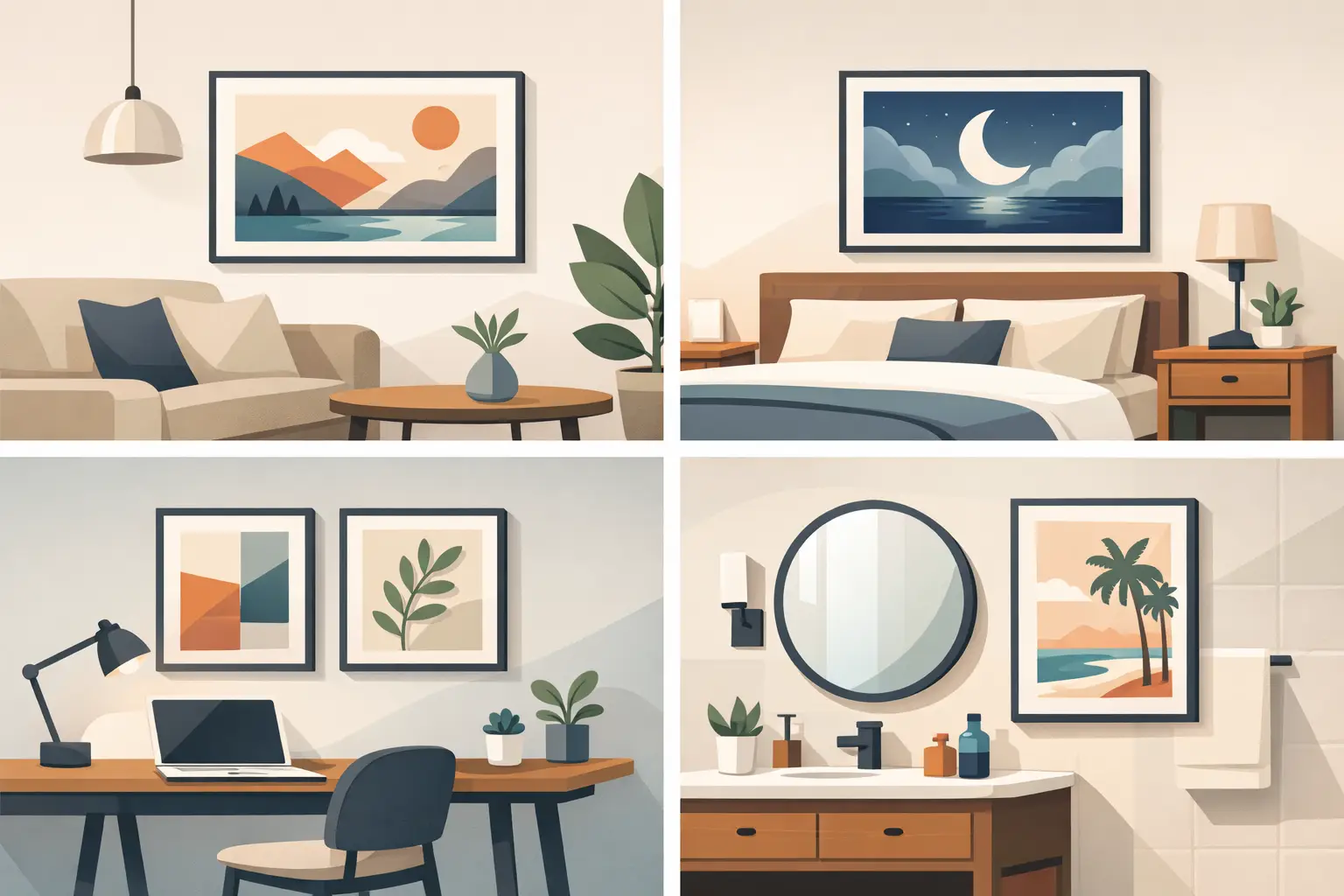
A blank wall can make even a well-furnished room feel unfinished. Glass framed prints offer one of the simplest ways to change that: familiar artwork arrives already protected, framed and ready to hang, so you can focus on the enjoyable part – choosing an image that feels right for your home.
Whether you are decorating a first flat, refreshing a tired hallway or looking for a thoughtful present, a compact framed print gives you the presence of art without the cost and effort of buying a print, finding a suitable frame and arranging it all separately. A well-chosen piece can pick up colours already in the room, create a focal point above a table or simply make an overlooked corner feel more personal.
Why choose glass framed prints?
The appeal is practical as much as decorative. A glass front protects the printed image from everyday dust, marks and accidental splashes, while the frame gives the artwork a neat, finished edge. Instead of wondering which mount, frame colour and size will work together, you receive a coordinated piece designed for display.
This is particularly useful with recognisable art. Vincent van Gogh’s expressive skies, L.S. Lowry’s distinctive industrial scenes or the gentle colour of French Impressionism all have a strong visual character. A ready-framed presentation lets those images take their place on the wall straight away, whether you know every detail of the artist’s work or simply enjoy the picture.
Glass also gives a print a crisp, polished appearance. It can make colours look especially clear in daylight and helps a smaller picture hold its own among furniture, lamps and textiles. The trade-off is that glass can reflect bright windows and overhead lighting. If glare is likely, try hanging the print on a wall beside a window rather than directly opposite it, or choose a position that is not beneath a strong ceiling light.
For many homes, compact formats are the most flexible. A 10 x 13.5-inch framed print can sit comfortably in a narrow hall, above a bedside table, on a small section of kitchen wall or within a larger gallery arrangement. It is substantial enough to be noticed but does not demand a large empty wall.
Match the artwork to the room
There is no rule that says formal art belongs only in formal rooms. The best choice depends on the mood you want to create and how the colours work with the rest of the space.
Living rooms: build around a focal point
In a living room, artwork often works best when it gives the eye somewhere to land. Above a sofa, sideboard or fireplace, choose a print with enough presence to hold the space. A Constable landscape can add calm to a room with natural wood and soft furnishings, while a Picasso-inspired composition can bring shape and energy to a plainer, more contemporary setting.
Look at the colours already doing the hard work in the room. If your cushions, rug or curtains include blues, greens or warm ochres, a landscape or Impressionist scene containing similar shades will feel intentional without being overly matched. You do not need every colour to align exactly. Repeating one or two tones is usually enough.
If one print looks too small above a wide sofa, avoid stretching the effect by placing it alone in the centre of a vast wall. Group two or three framed prints with related colours or subjects instead. Leave consistent gaps between frames – roughly 5 to 8 cm is a useful starting point – so the arrangement reads as one considered display.
Bedrooms: choose a quieter visual note
Bedrooms suit art that helps the room feel settled. Soft landscapes, floral paintings, muted portraits and gentle scenes in blue, cream, green or blush tones tend to work well here. A bright, dramatic image is not wrong, but it should complement the room rather than make the wall feel restless.
Hang a small framed print where it can be appreciated close up: above a bedside table, beside a dressing table or opposite the bed. If you are placing pictures above the headboard, treat them as a group and make sure they are securely fixed. The centre of the arrangement should generally sit at a comfortable viewing height, rather than being pushed close to the ceiling.
Hallways and landings: make the journey more interesting
Hallways are often short on furniture and long on blank wall space, which makes them ideal for glass framed prints. A single Lowry scene, a royal portrait or a classic botanical-style image can give guests something to notice as soon as they enter.
Because people move through these spaces rather than sit in them, a sequence of smaller prints often works better than one large statement piece. Choose a common thread: British artists, seaside scenes, black-and-white imagery or a repeated frame finish. The collection will feel connected even when the individual pictures are different.
Kitchens and dining areas: add character, not clutter
Art can make a kitchen or dining area feel less purely functional. Still lifes, cheerful floral pictures and pastoral scenes are natural choices, while a small classic print can bring charm to a dining nook. Glass is useful in these rooms because it offers a protective surface that is easy to keep looking tidy.
Keep framed art away from direct heat, heavy steam and areas likely to receive cooking splashes. A wall near a dining table is generally a better choice than a spot immediately beside the hob or kettle. In a compact kitchen, one carefully placed picture is often more effective than several competing for attention.
Getting the height and spacing right
A lovely image can look oddly placed if it is hung too high. As a general guide, aim for the centre of a single print to be around eye level, often about 145 cm from the floor. This is only a guide, not a measuring exercise. In a room where people are mostly seated, such as a lounge, you may want the artwork slightly lower.
When hanging above furniture, leave a visible relationship between the two. A gap of roughly 15 to 25 cm above a sofa, console or headboard usually keeps the print connected to the furniture instead of floating too far above it. Check the view from the doorway before committing to a fixing point.
For a gallery wall, lay the frames on the floor first. Move them around until the overall shape feels balanced, then take a quick photograph as a reference. Start hanging from the central piece and work outwards. This prevents the common problem of an arrangement gradually drifting too high or too far to one side.
Choosing a print you will still enjoy next year
Trends can provide useful ideas, but familiar art lasts because it has more than a passing decorative role. Choose a picture that you genuinely want to live with. It may remind you of a favourite place, suit your interest in British heritage, or simply make you smile when you pass it.
Recognisable artists offer an easy starting point. Van Gogh can bring movement and vivid colour. Monet and other Impressionists are often ideal for light-filled, relaxed rooms. Lowry gives a wall narrative and a distinct sense of place. Charles Burton Barber’s affectionate Victorian scenes can make a charming gift, particularly for dog lovers and traditional interiors.
Think, too, about the frame as part of the picture. A darker frame can give a historic image definition against pale walls, while a lighter or more neutral frame may sit quietly within a modern scheme. It depends on whether you want the artwork to stand out immediately or become part of a softer, layered room.
Affordable framed art also makes it easier to be personal. You do not have to make one expensive decision that must suit every future decorating change. Build your walls gradually, move pieces between rooms when you repaint, and mix much-loved classics with photographs, postcards or children’s drawings if that reflects your household.
Looking after glass-fronted artwork
A little care keeps framed prints looking their best. Dust the frame and glass with a soft, dry microfibre cloth. For a fingerprint on the glass, apply a small amount of glass cleaner to the cloth rather than spraying directly onto the frame, then wipe gently. This avoids liquid working its way into the edges of the frame.
Avoid hanging prints in persistently damp rooms or in direct, harsh sunlight for long periods. Bathrooms without good ventilation are not ideal, and a sunny wall may gradually affect printed colours over time. If a bright room is your only option, choose a wall that receives indirect light.
Before hanging, check the wall fixing is suitable for the wall type and the frame’s weight. Plasterboard, brick and solid walls need different fittings. A secure picture hook or appropriate wall fixing is a small detail, but it gives you confidence that your new artwork will stay exactly where it belongs.
The most successful walls are not those that follow every decorating rule. They are the ones that show a little of the people who live there. Start with one glass framed print you genuinely enjoy, give it a considered place, and let the next blank wall tell you what it needs.
One thought on “Glass Framed Prints for Every Room at Home”