

Blog
Art Placement Rules for a Better-Looking Home

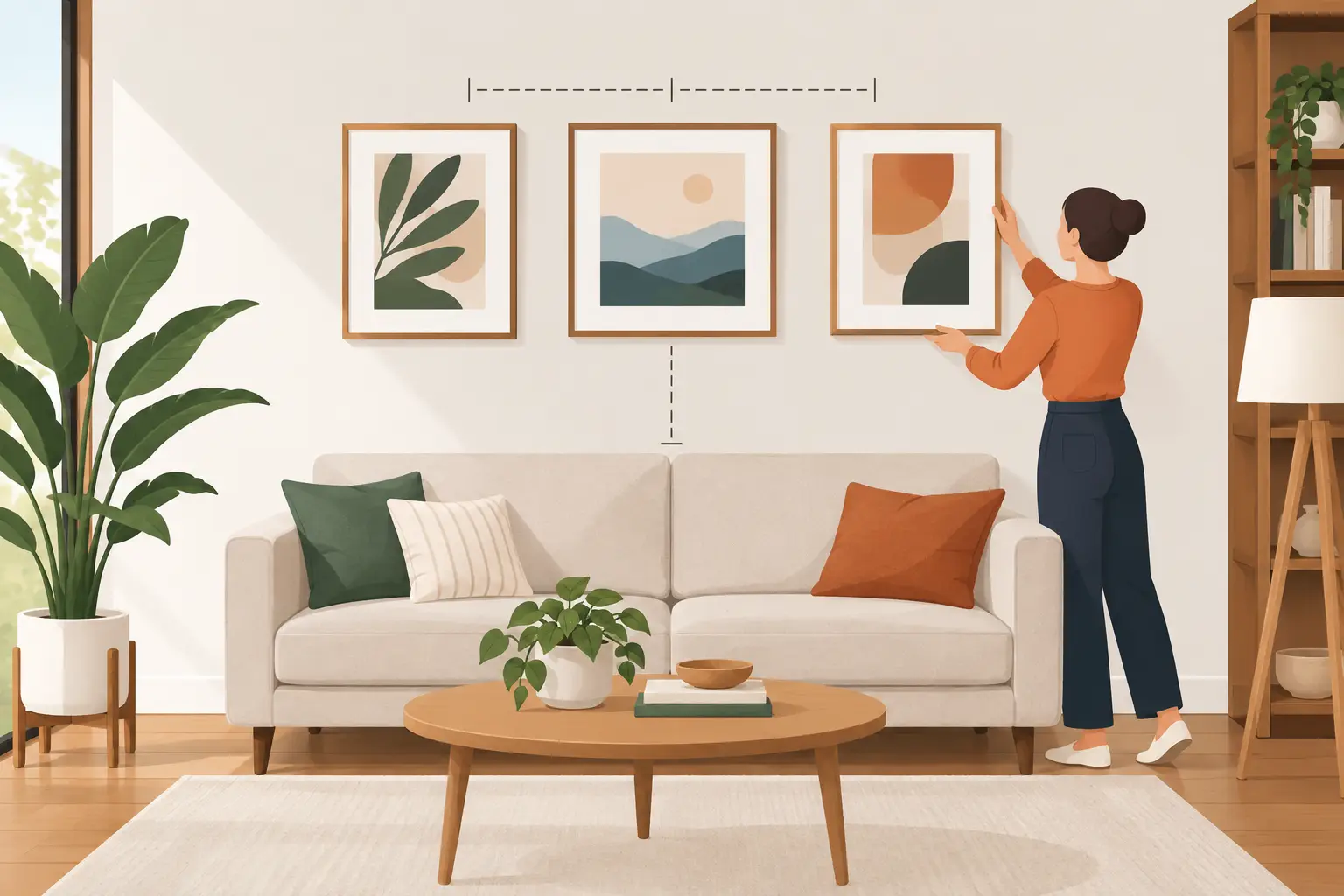
A framed print can be exactly the right colour and still look misplaced if it is hung a little too high, squeezed into a narrow gap or dwarfed by the furniture beneath it. The good news is that art placement rules are not mysterious design formulas reserved for grand homes. They are practical ways to help a favourite picture feel like it belongs in your room.
Whether you are hanging a single Van Gogh above a bedside table, adding a Lowry to a hallway or building a mixed gallery wall in the living room, start by looking at the wall as part of the room, not as an empty space to fill. A well-placed picture gives the eye somewhere pleasant to rest and can make even a modest room feel more considered.
Art Placement Rules That Work in Real Homes
The most useful rule is simple: hang artwork at a height where it can be comfortably viewed. In a room where people mostly stand, such as a hall or dining area, the centre of the picture should usually sit around 145 to 152 cm from the floor. This puts the artwork close to average eye level without making it feel as though it is floating near the ceiling.
That measurement is a starting point, not a command. A tall household, a low ceiling or a busy wall may call for a small adjustment. In a living room, where people spend much of their time sitting down, it is often better to hang art a little lower than you first expect. Pictures commonly look more connected to sofas, sideboards and beds when they are not placed too high above them.
Before reaching for a nail, cut a piece of paper to the size of your framed print and fix it to the wall with low-tack tape. Step back, sit down if it is going above seating, and look at it from the doorway. It is a quick way to avoid a row of unnecessary holes and gives you confidence before committing.
Keep artwork connected to furniture
When art hangs above a sofa, bed, console table or mantel, leave a visible but modest gap between the furniture and the frame. Around 15 to 20 cm usually feels balanced. More space can make the print appear detached, while too little space can look cramped.
Scale matters as much as height. A single small 10 x 13.5-inch framed print can look charming above a narrow table, beside a lamp or within a group of pictures. Above a three-seat sofa, however, one compact print may seem lost. Use several matching or complementary frames to create a wider arrangement, or choose a larger statement piece where the wall needs it.
As a useful guide, artwork above furniture should occupy roughly two-thirds to three-quarters of its width. This does not mean measuring every inch with a ruler. It simply stops a broad sofa being paired with something that feels too slight, or a narrow chest of drawers being overwhelmed by a huge image.
Choose the Wall Before Choosing the Picture
A blank wall does not always need art. A room needs areas of calm as well as focal points, particularly in smaller homes. Rather than trying to decorate every available surface, identify the wall people naturally notice first: opposite the sofa, above the bed, at the end of a hallway or behind a dining table. These are the places where framed art earns its place.
For a main focal wall, pick an image with enough character to hold attention. A vivid Impressionist landscape, a graphic Picasso composition or a recognisable royal portrait can set the mood for the room. Pull one or two colours from the picture into cushions, a throw, flowers or smaller accessories. You do not need an exact match. A soft blue in the print can be echoed by slate, navy or faded denim elsewhere in the room.
Quieter walls suit quieter subjects. A gentle Constable landscape can soften a bedroom, while a sentimental Charles Burton Barber print works beautifully in a family space, nursery or giftable corner. The aim is not to make every room follow one art movement. A home looks more personal when its pictures have different stories, linked by colour, frame finish or a shared feeling.
Consider light, glass and reflection
Glass-fronted framed prints give artwork a neat, finished appearance and help protect the image, but glass can reflect bright light. Avoid placing a picture directly opposite a large window where possible, especially if the view of the print becomes washed out during the day.
Side lighting is kinder than direct glare. If the only suitable wall faces a window, shift the artwork slightly to one side or use nearby lamps to create a warmer evening focus. It is also wise to keep framed prints away from consistently damp areas. A bathroom with good ventilation may take a small picture, but steamy walls are not ideal for paper-based art.
How to Arrange a Gallery Wall Without the Guesswork
Gallery walls are a good answer when you love several images but do not want one print to do all the work. They can combine familiar artists, landscape scenes, portraits and decorative subjects, yet they still need a little discipline to look intentional rather than accidental.
Start on the floor. Lay the frames out in front of the wall and move them around until the group feels balanced. You are looking for an overall shape, such as a loose rectangle, a neat grid or an organic cluster that grows around a central picture. Take a photograph on your phone before hanging anything, as this makes it easier to remember the final arrangement.
Keep the spaces between frames consistent. For compact framed prints, a gap of around 5 to 8 cm is usually enough. Treat that gap as part of the display. Uneven spacing is noticeable even when individual pictures are lovely.
A gallery wall does not require identical pictures, but it benefits from a repeating element. That might be black frames, warm wood tones, a collection of classic paintings or a palette of greens, creams and blues. If your collection is varied, choose one larger or bolder print as the anchor, then place smaller pieces around it. A Van Gogh or Picasso reproduction often has enough visual energy to take on that role.
For a staircase, follow the angle of the handrail rather than hanging every frame at the same height. Keep the centre line of the arrangement roughly parallel with the rail, and maintain even gaps as the display rises. This turns an awkward transitional space into a small visual journey through the house.
Room-by-Room Placement Ideas
In the living room, art works best when it supports the seating area. Hang it above the sofa, over a sideboard or on the wall opposite the main seating position. Choose a subject you will enjoy seeing repeatedly. A busy, colourful painting can bring life to a neutral room, while a misty landscape offers a calmer effect.
Bedrooms suit personal, restful choices. Place a print above the headboard with a lower gap than you might use on an empty wall, or create a pair of matching pictures above bedside tables. Soft Impressionist scenes, floral studies and gentle countryside views tend to work well here, though the best choice is always one that feels pleasant at the end of the day.
In hallways, go for images that offer an immediate welcome. A single framed print at the end of a narrow corridor creates a destination and makes the space feel longer. If the hallway is slim, keep frames compact so that the display adds character without making the walls feel crowded.
Dining rooms can take a little more drama. A larger group of framed pictures above a sideboard gives the room a sense of occasion, while classic portraits and expressive paintings make excellent conversation starters when guests are round.
Break a Rule When the Room Calls for It
The best art placement rules help you make decisions, but they should not flatten your personality. Hanging a beloved small print alone on a large wall can look deliberate if you give it a beautiful chair, lamp or table beneath it. A picture placed higher than eye level can work above a tall bookcase or fireplace, where the architecture sets the rhythm.
What matters is visual connection. Does the artwork relate to the furniture, the colours and the way you use the room? Does it make you pause when you walk past? Affordable framed art makes it easy to experiment, so try a position, live with it for a few days and adjust if needed.
A well-chosen print does more than cover a blank wall. Give it a thoughtful height, enough breathing room and a place where its colours can be noticed, and it will make the everyday view of your home feel far more like your own.