

Blog
Prints Versus Paintings: Which Suits Your Home?

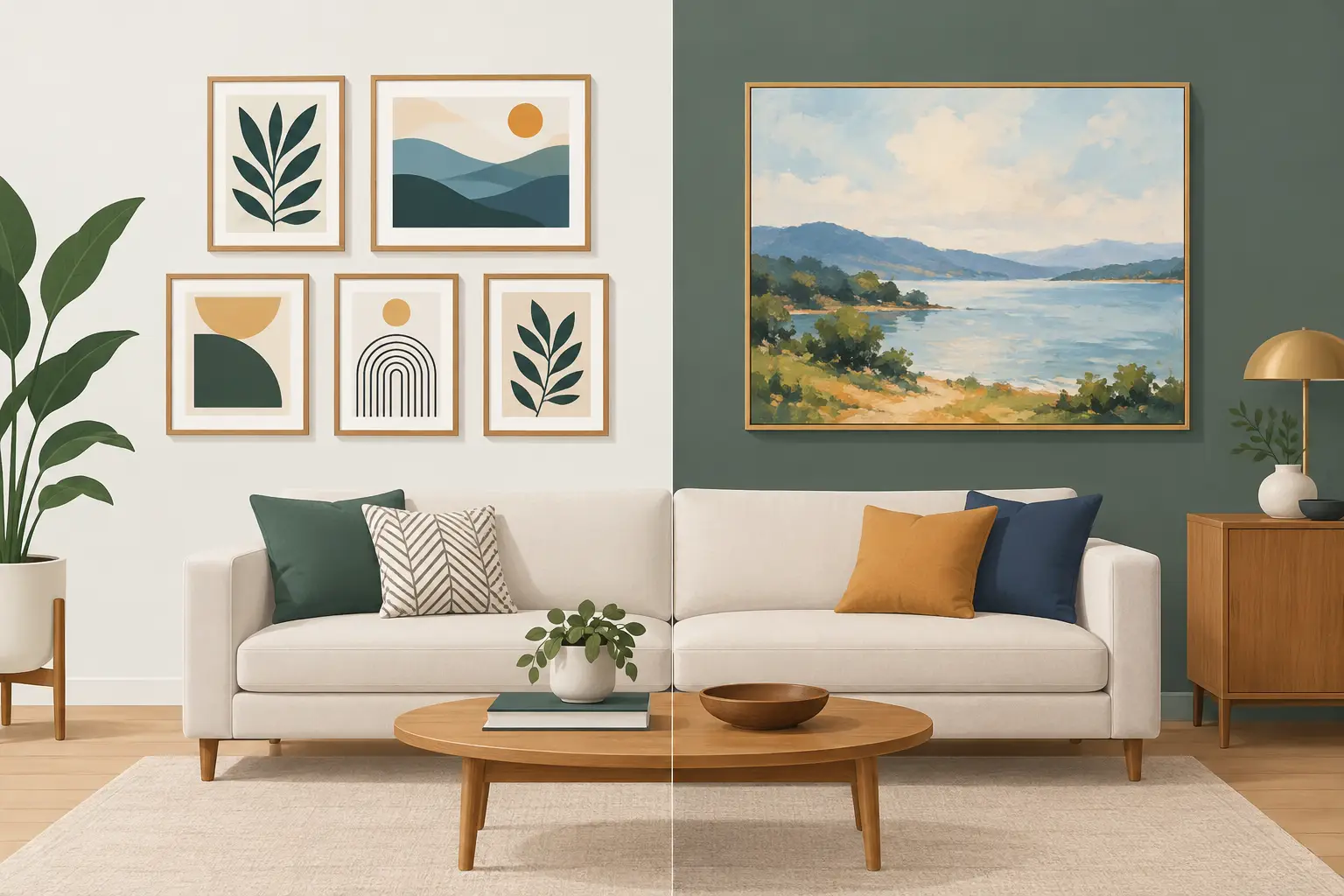
A blank wall does not need a gallery budget to look considered. When weighing up prints versus paintings, the best choice is often less about art-world rules and more about the room, your budget and how quickly you want to enjoy the finished look. A framed print of a much-loved Van Gogh, Lowry or Constable can bring colour and character to a home straight away. An original painting can offer a one-off presence that some buyers value deeply.
Both have a place in a well-decorated home. The key is knowing what you are buying, what you want it to do in the room, and where it will be displayed.
Prints versus paintings: the essential difference
A painting is usually an original work made by an artist, often with oil, acrylic, watercolour or another medium on canvas, board or paper. It is unique: there is only one original piece, even when the artist creates a series around a similar subject.
A print is a reproduction of an artwork or image. It may reproduce a famous painting, photograph, illustration or design, allowing more people to enjoy the image at a far more accessible price. Fine art prints can be produced in many formats, from unframed posters to carefully presented, glass-fronted framed prints ready for the wall.
There is one useful exception to remember. Some artists create original printmaking works, such as etchings, screen prints and lithographs, in limited editions. These are prints, but they are also original works in their own right. For everyday home decorating, however, shoppers are usually comparing a reproduction print with an original painting.
Price: where prints make art more attainable
For most homes, price is the clearest difference. Original paintings reflect the artist’s time, materials, reputation and the fact that the work is one of a kind. Even a small piece by an emerging artist may cost considerably more than a framed reproduction.
That does not make a print a lesser decorating choice. It simply serves a different purpose. A ready-framed print lets you enjoy familiar art and decorative subjects without committing a large sum to one wall. It can be especially useful when furnishing a first home, refreshing a rented flat, styling a guest bedroom or choosing a thoughtful gift.
A modest budget can also create more visual impact when spread across several pieces. Instead of one expensive artwork, you might build a gallery wall with a French Impressionist landscape, a royal portrait and a cheerful Victorian dog scene. The collection feels personal, and you can adjust it as your taste or home changes.
Character, texture and the appeal of an original
An original painting has physical qualities that a reproduction cannot fully copy. You may see raised brushstrokes, changes in texture, pencil marks beneath the paint or tiny decisions made by the artist’s hand. In certain rooms, that individuality becomes part of the appeal. A single original above a mantelpiece or sideboard can act as a quiet focal point and a conversation starter.
Originals also suit buyers who enjoy seeking out new artists and living with something no one else owns. If you are purchasing directly from an artist, the story behind the work can feel as meaningful as the image itself.
Yet original does not automatically mean right for every wall. A painting may be an awkward size, require specialist framing or need careful placement away from strong sunlight, damp and busy areas of the home. It may also be harder to replace if your scheme changes. For a practical, decorative update, a framed print is often the easier decision.
Why framed prints work so well at home
The advantage of a framed print is not only its price. It is the convenience of a finished piece that brings an established artwork into your room without the extra task of finding a suitable frame, measuring mounts or arranging professional glazing.
For compact spaces, a smaller framed format can make a surprising difference. Place one above a bedside table, beside a reading chair or on a narrow wall between doors. A 10 x 13.5-inch framed print is large enough to register as intentional decoration, while still being easy to position in homes where wall space is limited.
Recognisable images also make decorating less daunting. A Lowry street scene can introduce northern character and restrained tones. A Van Gogh floral work adds movement and rich colour. Picasso prints can bring a more graphic, modern edge, while a Constable landscape softens a sitting room with a sense of countryside and sky. You do not need an art-history qualification to choose what you enjoy seeing every day.
Choose according to the room, not just the artwork
Before deciding between a print and a painting, stand in the room and consider its job. A living room often benefits from a focal point, whether that is a larger original painting or a carefully arranged grouping of framed prints. In a dining area, art can be more playful or sociable: portraits, café scenes and colourful Impressionist works all work well.
Bedrooms are usually more personal. A calm landscape, a delicate floral painting or a favourite classic artwork can make the space feel settled without demanding attention. For a hallway, where people only pause briefly, choose a clear image with enough contrast to hold its own. A framed print is particularly practical here because it is easy to coordinate with a mirror, console table or family photographs.
Think about colour before you buy. You do not need to match every shade exactly. Instead, pick out one or two colours already in the room. A print with warm ochres can sit beautifully near timber furniture, while blue-green landscapes work naturally with grey, cream or navy furnishings. If the room is mostly neutral, artwork is a simple way to introduce colour without replacing cushions, curtains or paint.
Scale matters more than rarity
A common decorating mistake is choosing art that is too small for the wall. An original painting may be valuable, but if it looks lost above a wide sofa, it will not create the effect you hoped for. Equally, a large statement piece can overwhelm a compact room.
Use the furniture beneath the art as a guide. Above a sofa, sideboard or bed, aim for a display that occupies a meaningful portion of the furniture’s width. This may mean choosing several framed prints instead of one small painting. Repeating similar frame colours and leaving even gaps between pieces gives the arrangement a calm, deliberate finish.
When a painting is worth the extra spend
An original painting can be the right purchase when you feel a genuine connection to the artist or work, have a wall that deserves a standout piece, and are happy to treat the purchase as something to keep for many years. It can also be a lovely milestone gift for a wedding, anniversary or new home.
Be realistic about practicalities. Ask about the medium, framing, care requirements and whether the work should be kept out of direct daylight. Paintings on canvas can be more vulnerable to knocks than a compact glass-fronted framed print, especially in a lively family home or a narrow hallway.
If you are not ready to make that commitment, there is no need to wait for the perfect original before decorating. Art on the wall changes the feeling of a room now, not someday.
A thoughtful mix often looks best
The choice does not have to be prints or paintings throughout the house. Many of the most welcoming interiors mix both. An original painting might take pride of place in the sitting room, while framed prints bring personality to bedrooms, stairs, kitchens and smaller walls.
Mixing art sources also stops a home from feeling overly formal. Place a treasured original near a group of classic art prints, or use framed reproductions to echo the colours in a painting elsewhere in the room. The result can feel collected over time rather than bought all at once.
The best artwork is the piece that makes you pause when you walk past it. Whether that is a one-off painting or an affordable framed print, choose the image that gives your home more of your own character.